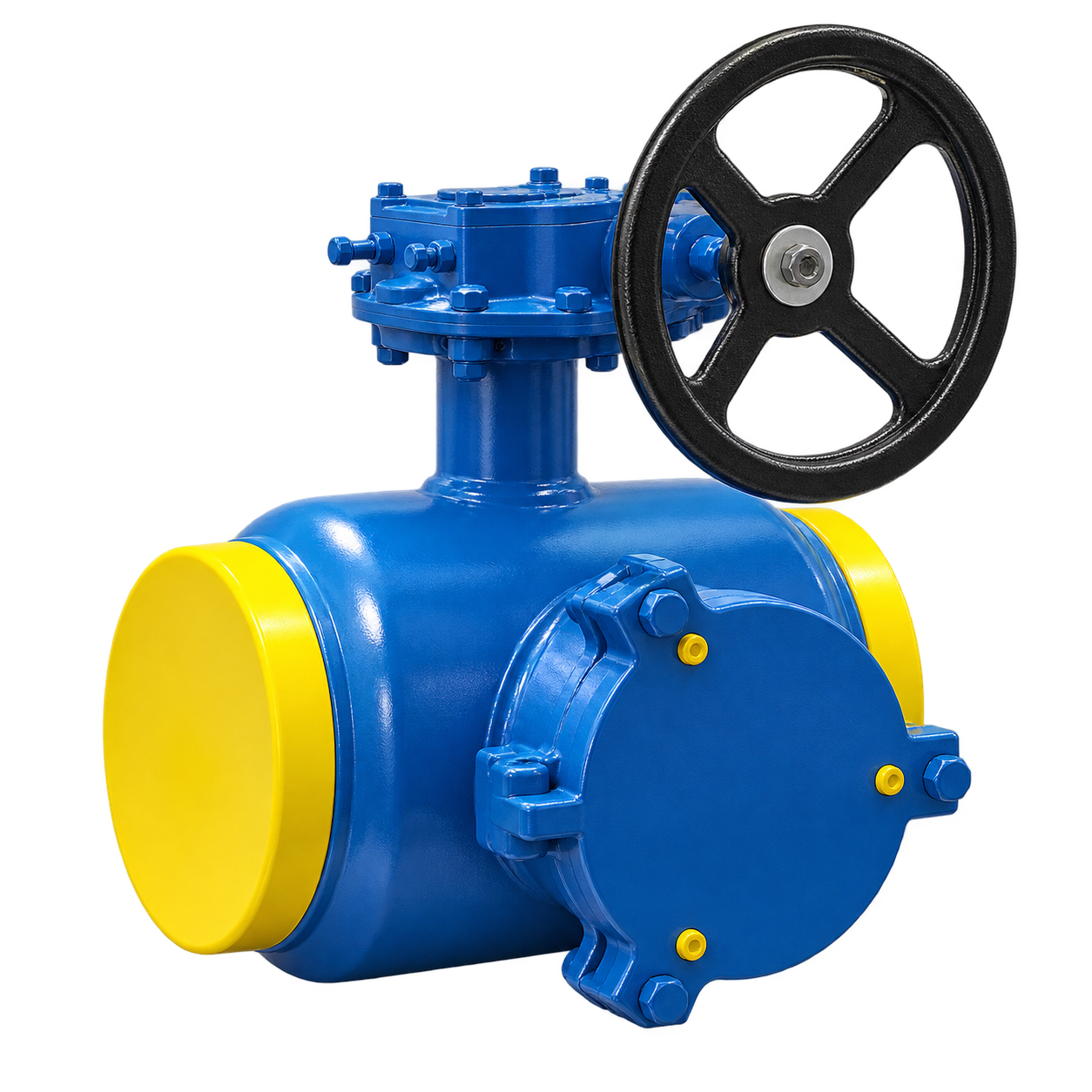
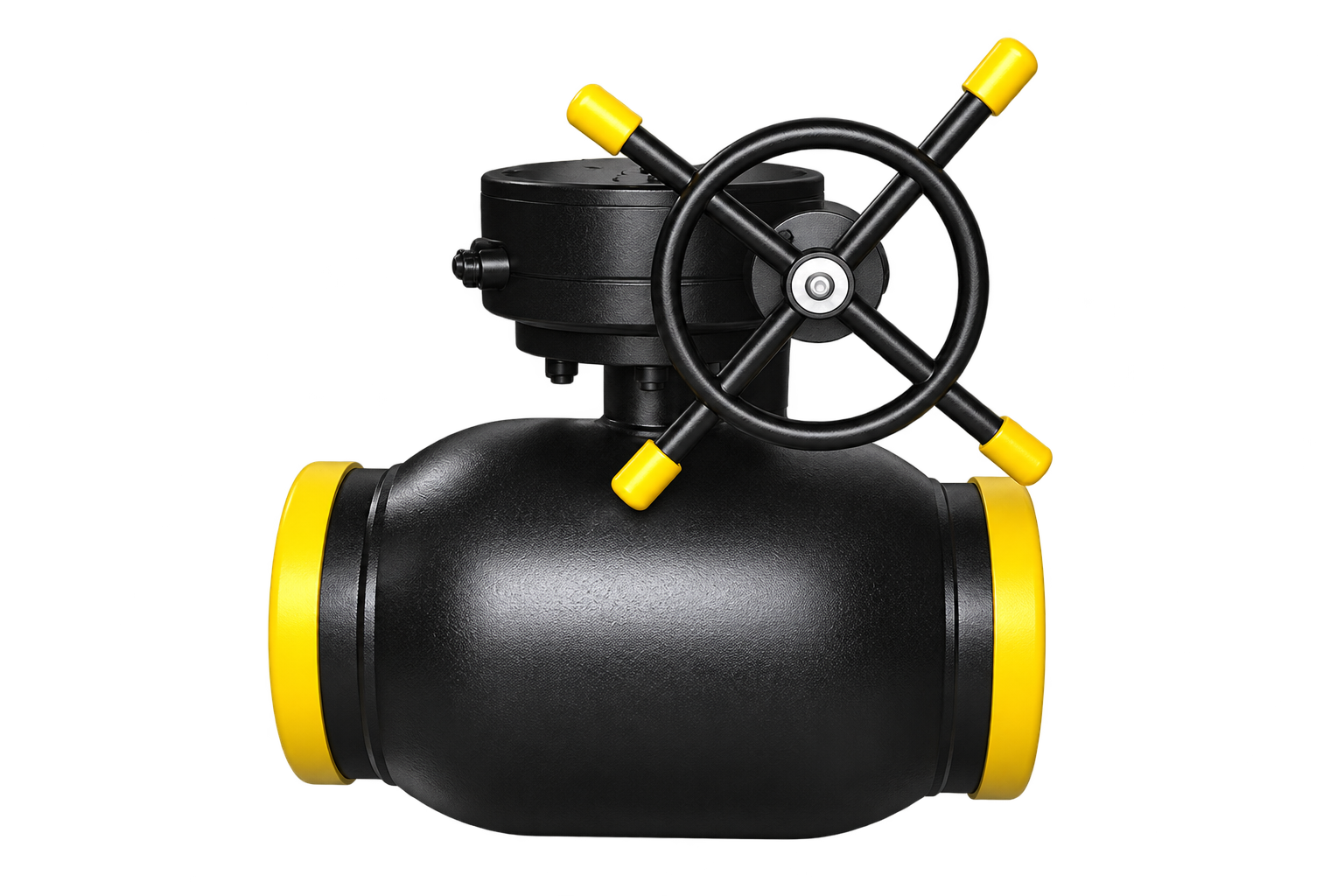
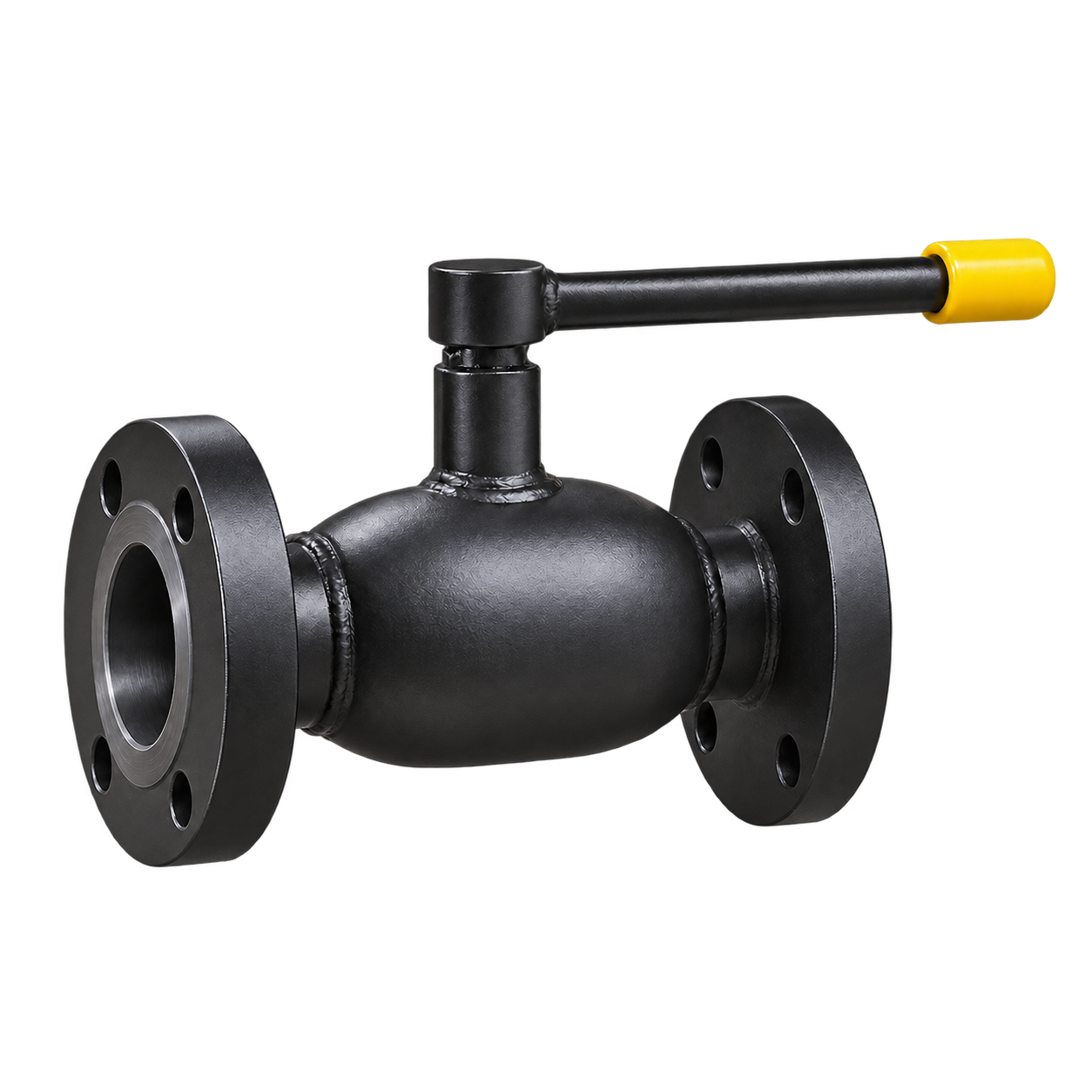
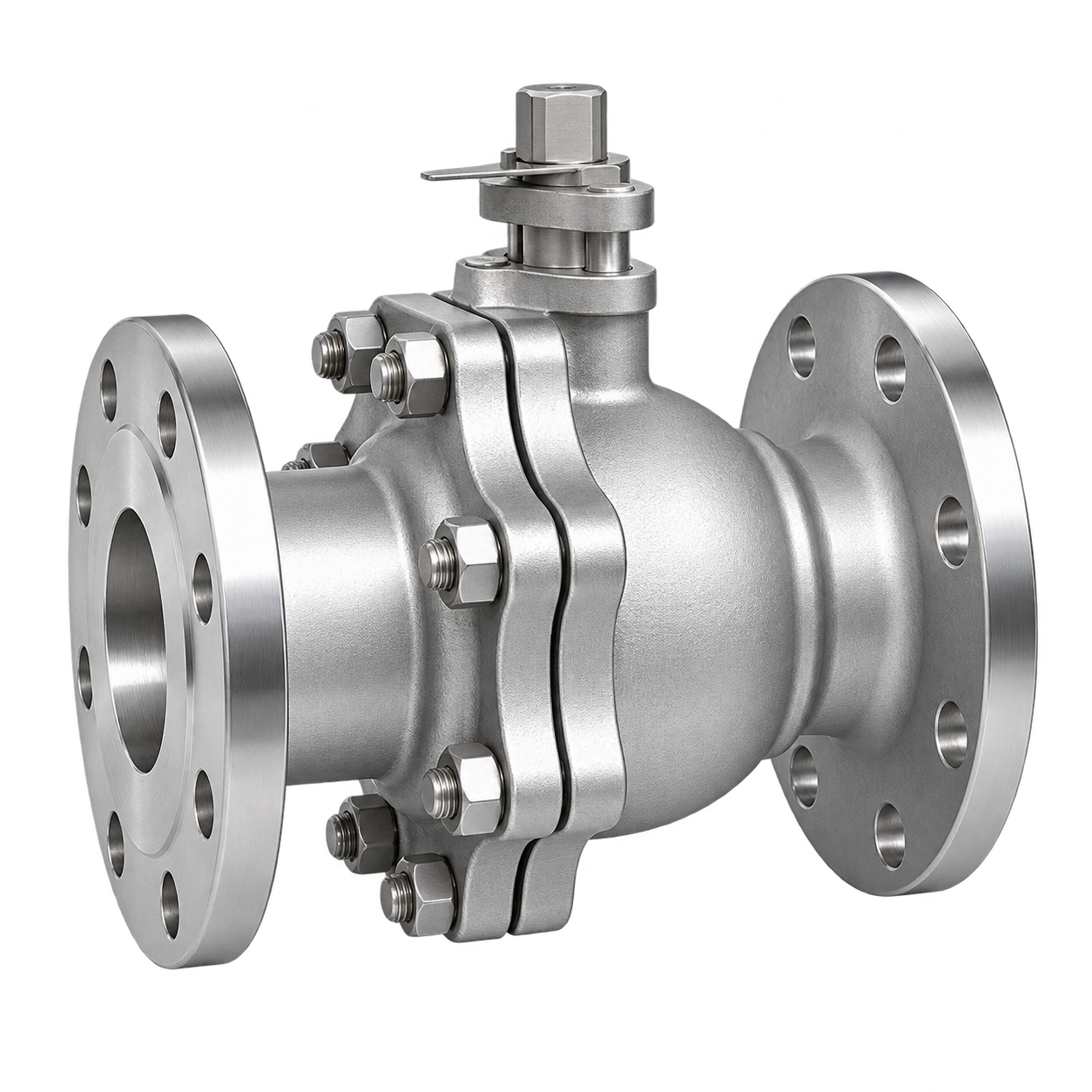
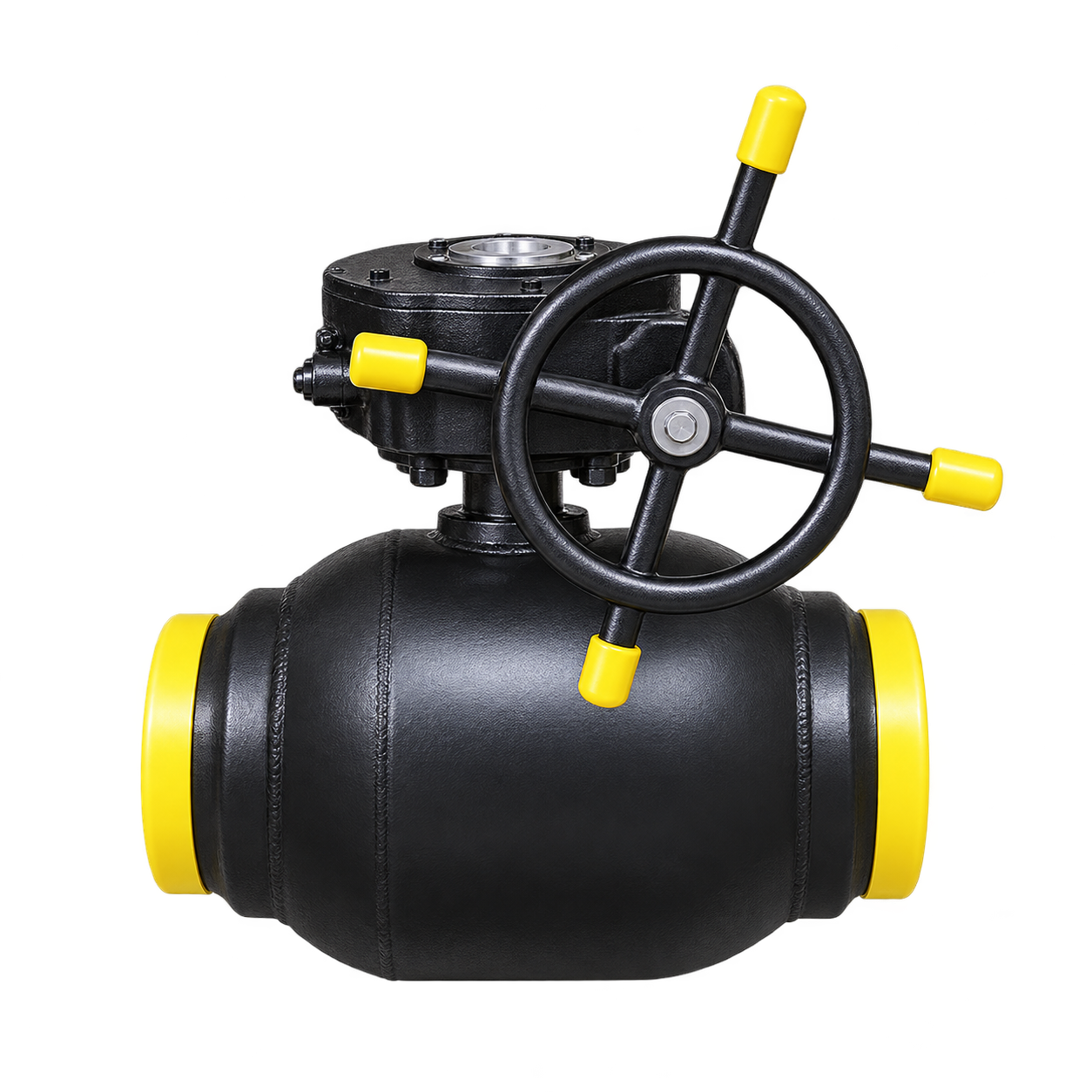
Body and connections
Body exterior and connection details
Ball Valves
Manual Fully Welded Ball Valve supports pipeline isolation and flow routing. Selection focuses on the sealing arrangement, fluid conditions, piping interfaces and operating requirements.
Configuration and suitability depend on the specific model documentation.
A ball valve opens or closes the pipeline by rotating a ported ball. Port geometry, seats and stem sealing determine its operating behavior. Selection should consider differential pressure, fluid cleanliness and cycling duty together.
A fully welded body uses welded joints to form the pressure-containing shell with fewer detachable body joints. Review shell inspection, end-connection welding procedures and the maintenance approach after installation. Body construction and pipeline end connections are separate design decisions.
Match the operator to the valve load and site operating method. Manual operation needs accessible clearance. Frequent cycling or remote control also calls for assessment of output capability, duty and position feedback.
Welded ends must suit pipe material, wall thickness and the construction procedure. Heat effects, protection of internal seals and post-weld cleanliness are important. Set welding parameters and inspection methods for the actual materials and joint.
Define fluid composition and continuous and start-stop operating conditions, then assess body, internals and seals as a combination. Particles, deposits and cleaning affect sealing surfaces and mechanisms; plan maintenance for the actual service.
Body exterior and connection details
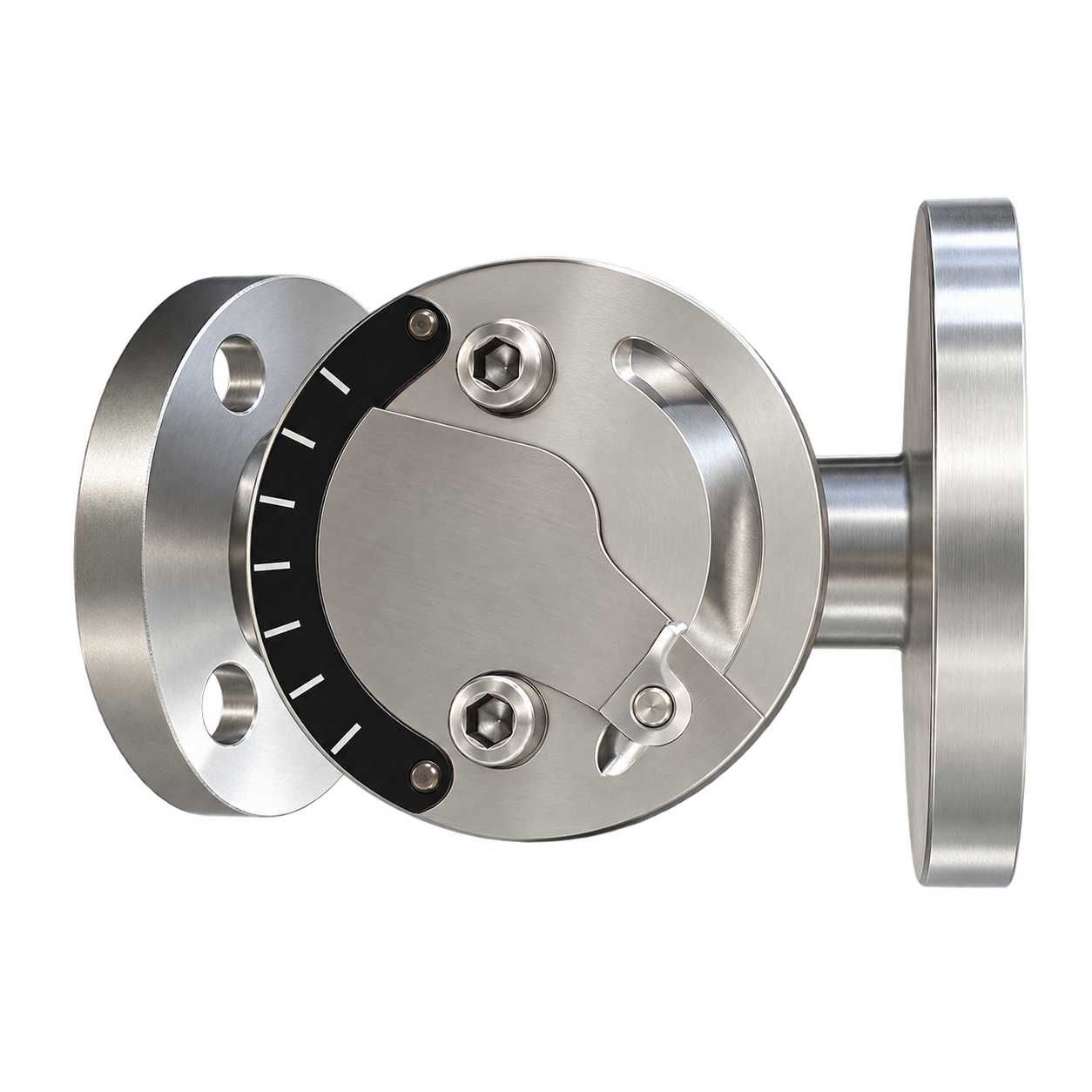
Operating mechanism and mounting details
Explore the product structure and configuration.
Structure depends on the model. Select the image to enlarge.
No matching features.
Confirm the configuration for the medium and service conditions.
Explore all industries →Share your medium and conditions so we can assist.