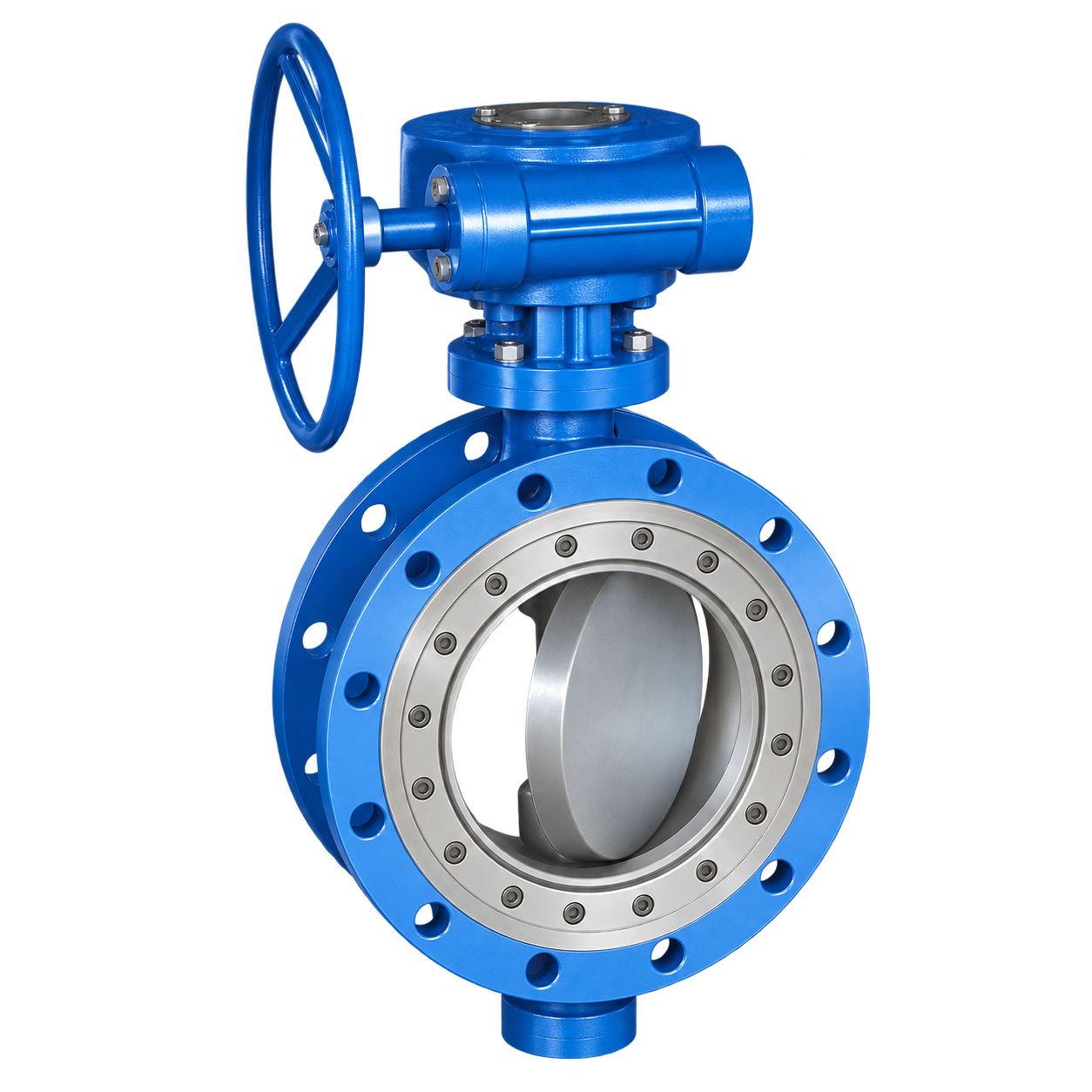
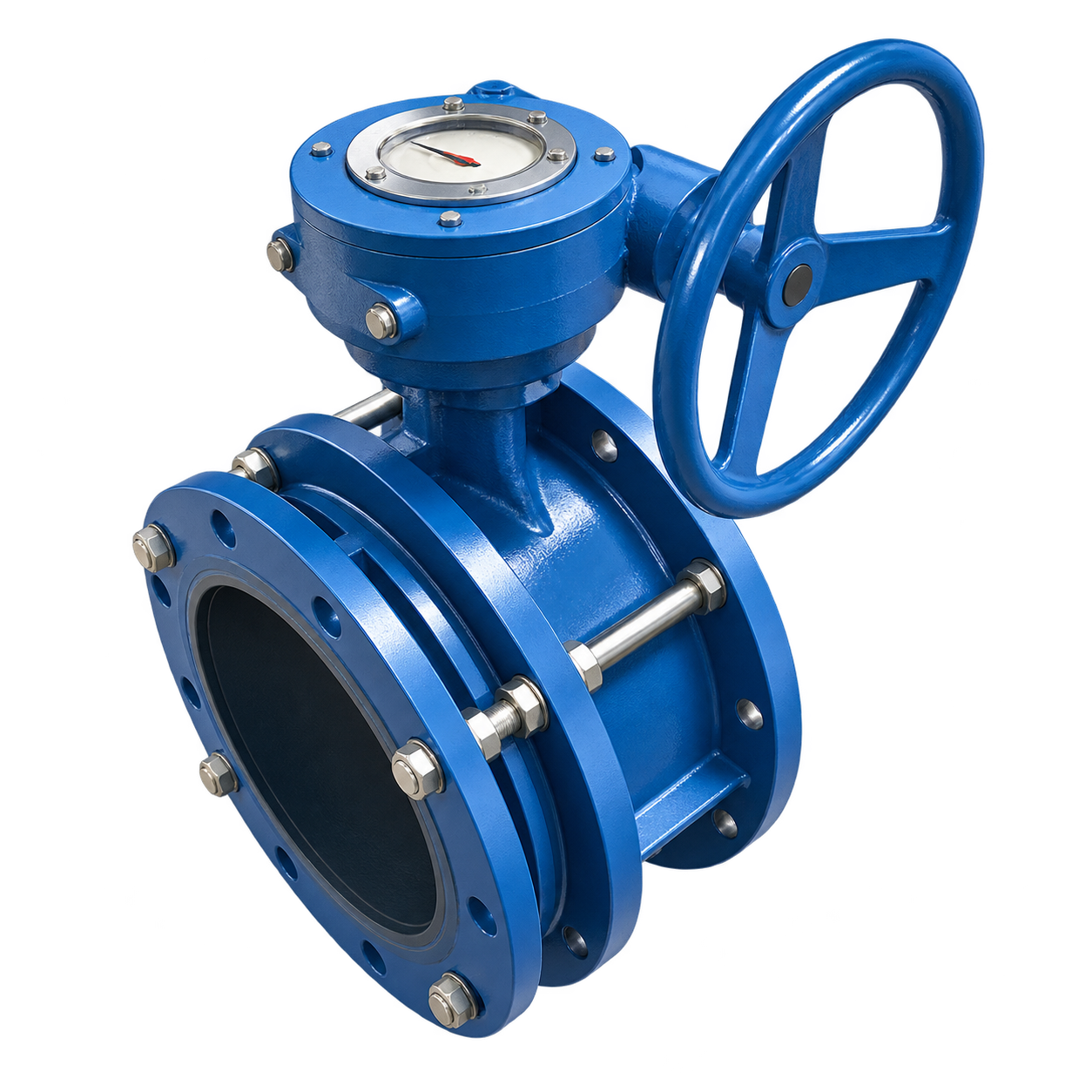
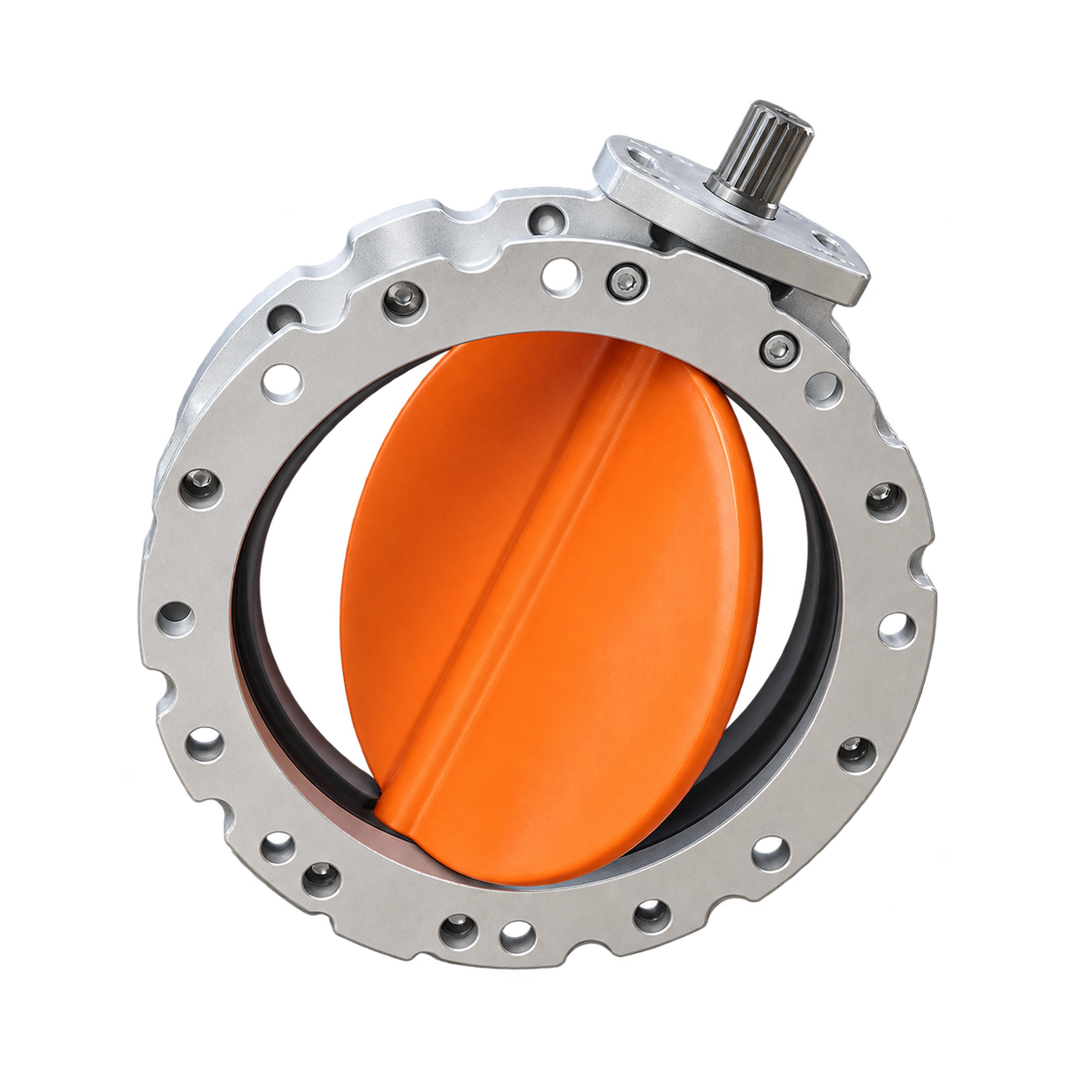
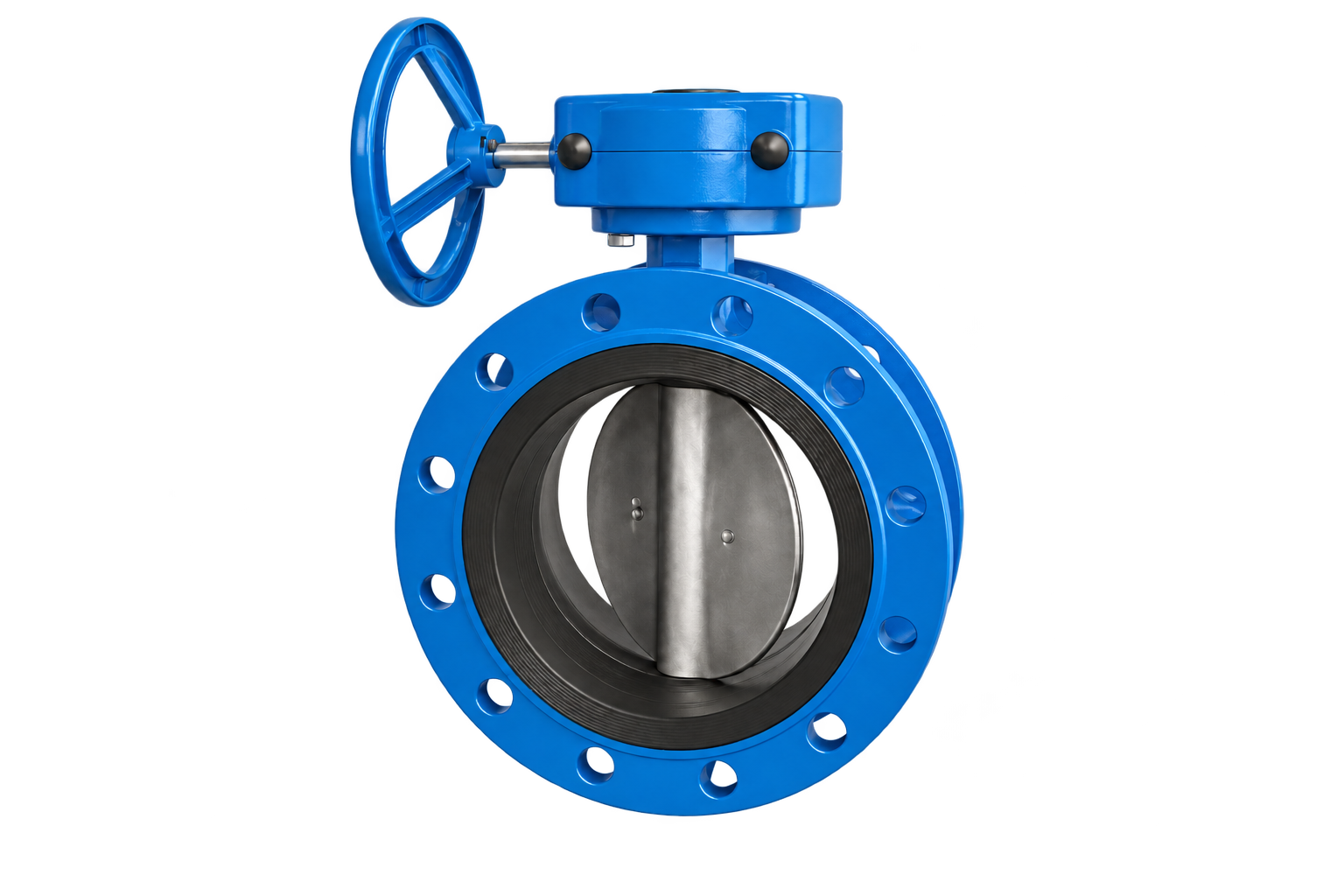
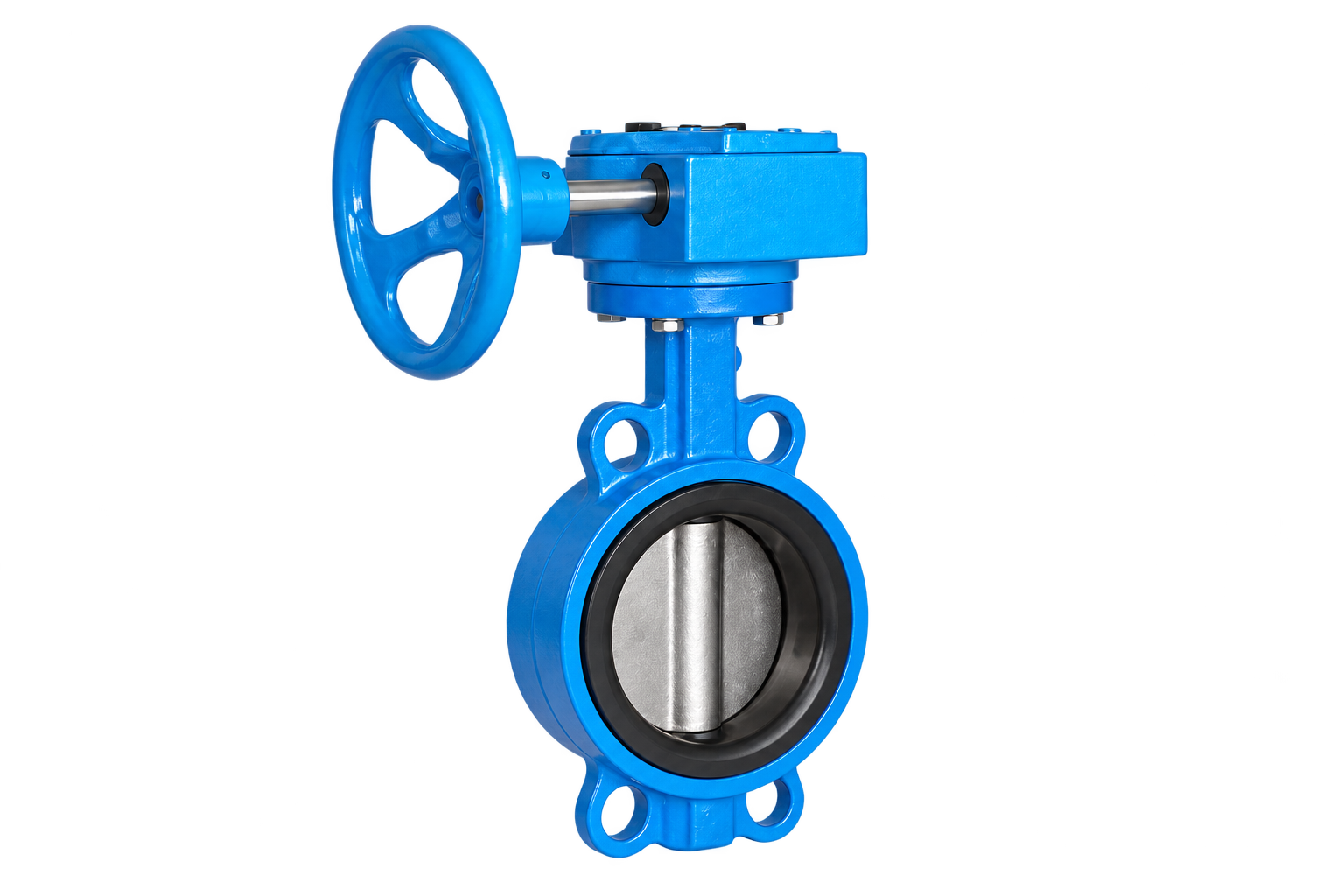
Body and connections
Body exterior and connection details
Butterfly Valves
Ventilation Butterfly Valve supports pipeline isolation and flow control where the configuration suits the duty. Selection focuses on the sealing arrangement, fluid conditions, piping interfaces and operating requirements.
Configuration and suitability depend on the specific model documentation.
A butterfly valve changes the available flow area as its disc rotates about the stem. Its compact rotary arrangement is widely used for pipeline isolation. Flow-control duty also requires assessment of disc position, differential pressure, flow response and actuator control capability.
Ventilation and duct control require review of flow area, dust loading, leakage requirements and operating torque. Louver and flap arrangements also need blade layout, linkage and closed clearances checked. Duct valves require duty-specific selection rather than substitution based on appearance.
Match the operator to the valve load and site operating method. Manual operation needs accessible clearance. Frequent cycling or remote control also calls for assessment of output capability, duty and position feedback.
Define fluid composition and continuous and start-stop operating conditions, then assess body, internals and seals as a combination. Particles, deposits and cleaning affect sealing surfaces and mechanisms; plan maintenance for the actual service.
Body exterior and connection details
Operating mechanism and mounting details
Explore the product structure and configuration.
Structure depends on the model. Select the image to enlarge.
No matching features.
Confirm the configuration for the medium and service conditions.
Explore all industries →Share your medium and conditions so we can assist.