Service conditions
A ball valve opens or closes the pipeline by rotating a ported ball. Port geometry, seats and stem sealing determine its operating behavior. Selection should consider differential pressure, fluid cleanliness and cycling duty together.
Construction and description
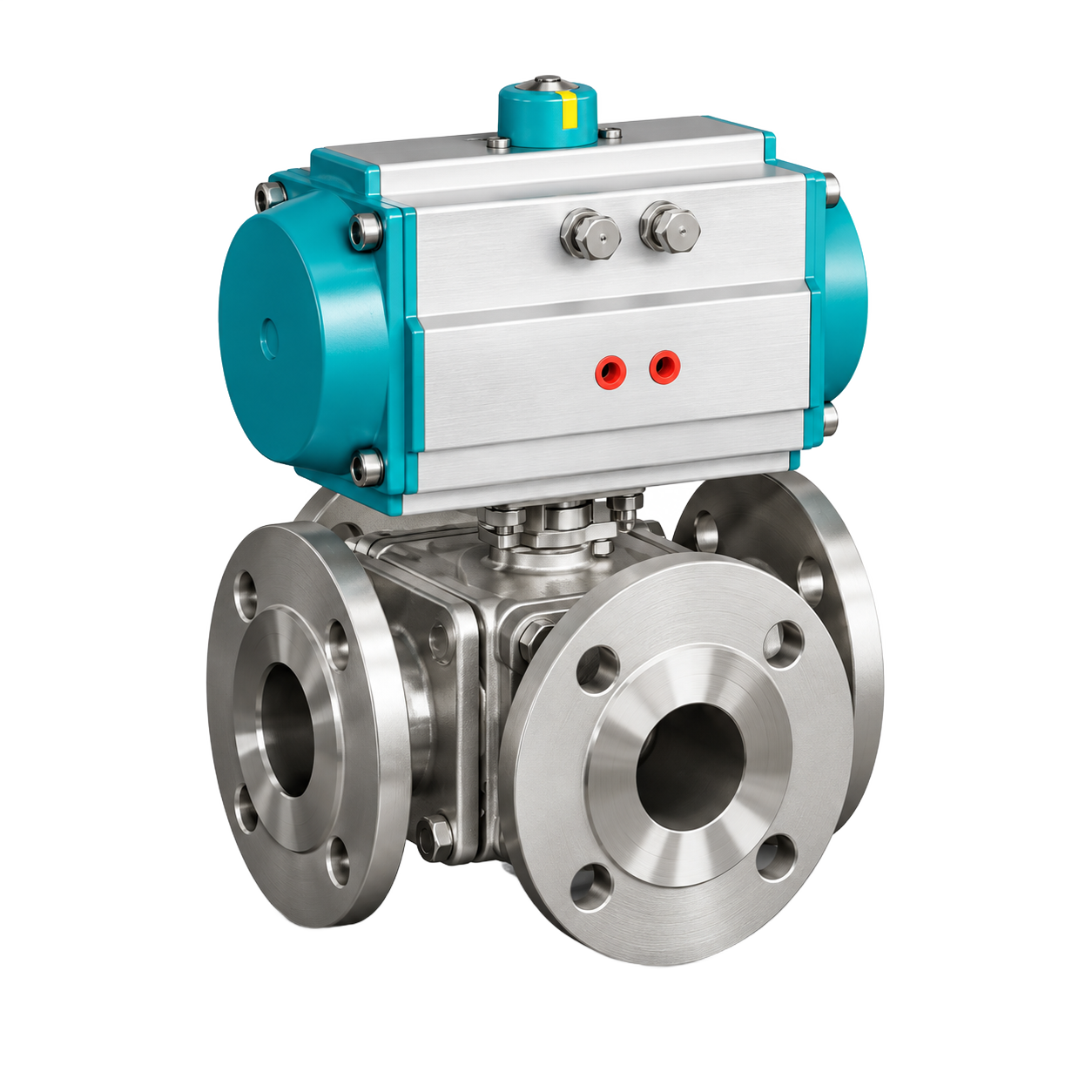
Multiport ball valves route fluid through combinations of internal passages and port positions. Define port numbering, required connections and switching sequence before procurement and piping, then check them against a flow-path diagram. Equal port counts do not imply identical routing or isolation arrangements.
Match the operator to the valve load and site operating method. Manual operation needs accessible clearance. Frequent cycling or remote control also calls for assessment of output capability, duty and position feedback.
Service conditions
Flanged ends support piping interfaces and removal for service. Match flange standard, pressure designation, facing, gasket and fasteners, and check face-to-face length and pipe support to limit piping loads on the body.
Construction and description
Define fluid composition and continuous and start-stop operating conditions, then assess body, internals and seals as a combination. Particles, deposits and cleaning affect sealing surfaces and mechanisms; plan maintenance for the actual service.

 Industry image unavailableIllustrative scene