Service conditions
A ball valve opens or closes the pipeline by rotating a ported ball. Port geometry, seats and stem sealing determine its operating behavior. Selection should consider differential pressure, fluid cleanliness and cycling duty together.
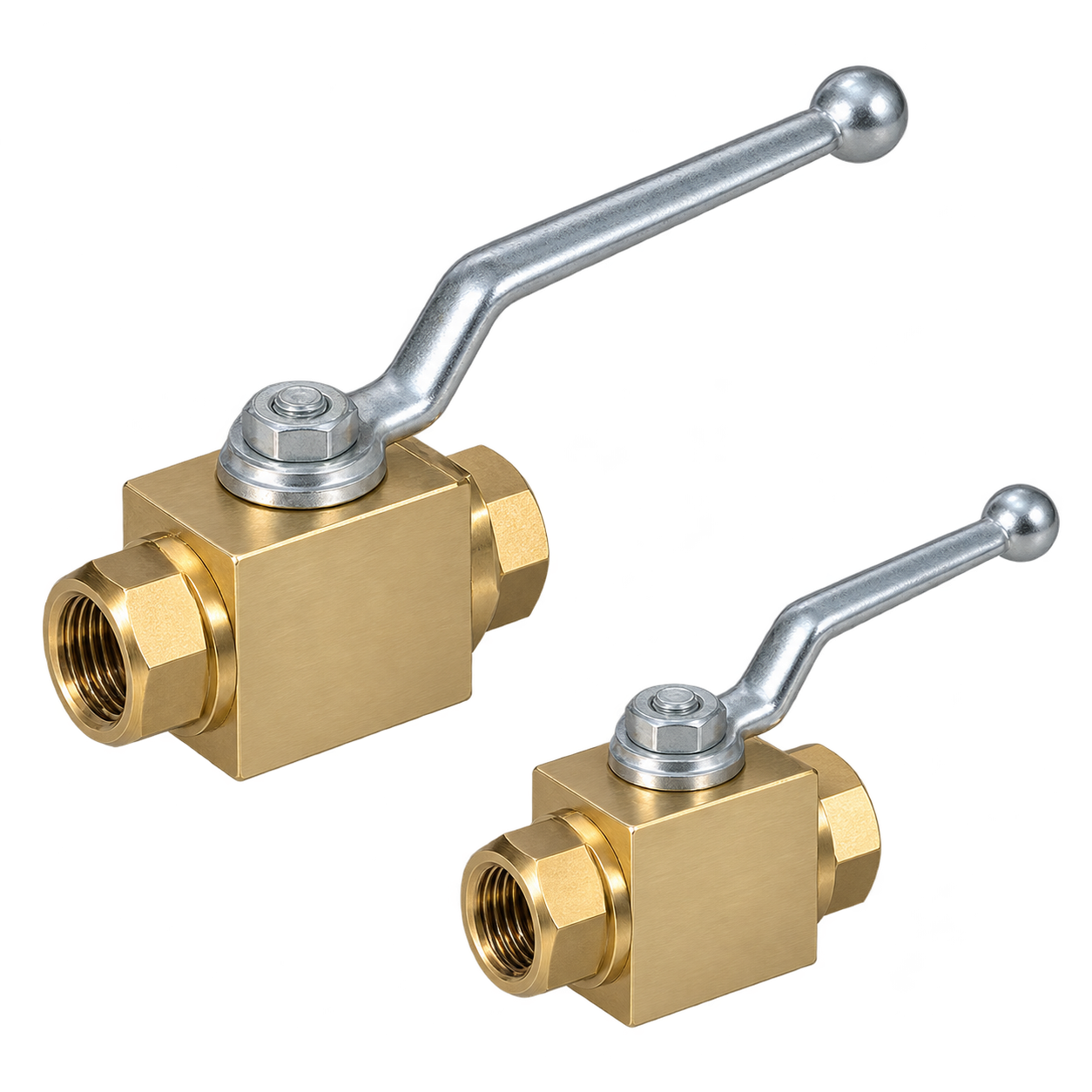
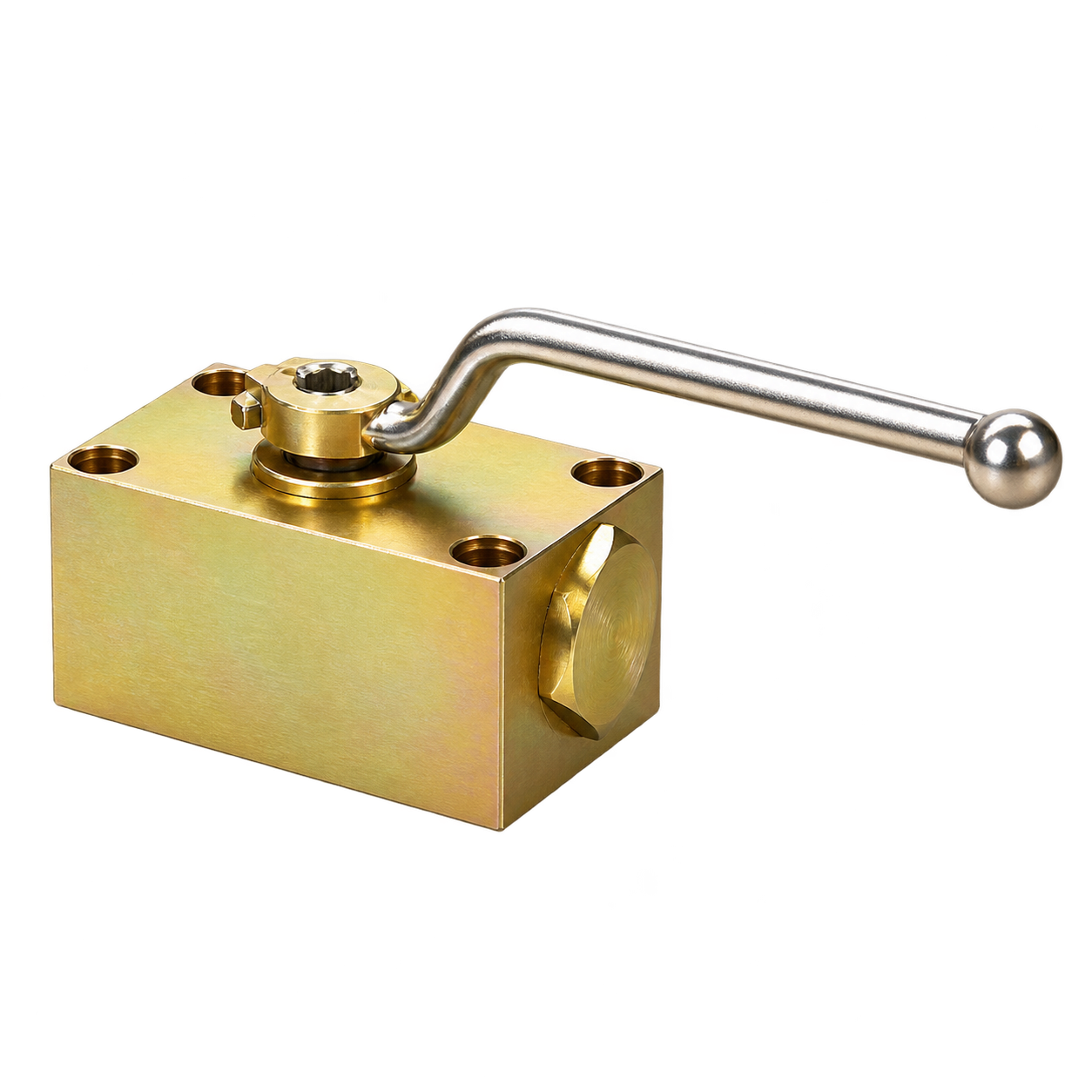
High-pressure hydraulic piping or manifold service requires defined interfaces, working-fluid compatibility and internal routing. Match threads, manifold mounting faces or fitting dimensions and assess configuration against pressure changes, contamination control and cycling.
Construction and description
Multiport ball valves route fluid through combinations of internal passages and port positions. Define port numbering, required connections and switching sequence before procurement and piping, then check them against a flow-path diagram. Equal port counts do not imply identical routing or isolation arrangements.
Match the operator to the valve load and site operating method. Manual operation needs accessible clearance. Frequent cycling or remote control also calls for assessment of output capability, duty and position feedback.
Service conditions
High-pressure duty requires combined assessment of pressure-containing parts, seat loading and operator demand. Connections, fasteners and bonnet joints must suit the pressure-temperature combination, with differential-pressure changes and erosion considered during operation.
Construction and description
Define fluid composition and continuous and start-stop operating conditions, then assess body, internals and seals as a combination. Particles, deposits and cleaning affect sealing surfaces and mechanisms; plan maintenance for the actual service.

 Industry image unavailableIllustrative scene